Anti-theft Purse Prototype


Context and Problem
FINAL PROJECT, WEARABLE TECHNOLOGY
UNIVERSITY OF DENVER
This project explores how wearable technology can improve personal safety through subtle but effective interaction design. I designed and prototyped an anti-theft purse intended for travel, which triggers an audible alarm and flashing lights when touch is detected on the zipper while the bag is in a locked mode.
PROBLEM
Pickpocketing is a common issue for travelers, and existing solutions often rely on visual awareness or constant attention. This risk is amplified for users who are hearing or visually impaired, who may not notice subtle cues that their bag is being accessed.
DESIGN QUESTION
How might a wearable accessory use multisensory feedback to alert users to unwanted interaction in a way that is accessible, intuitive, and travel-friendly?
DURATION: 5 weeks
Research
I began by identifying potential users and the contexts in which the bag would be used.
PRIMARY USERS
Travelers in environments where pickpocketing is common
Users who are hearing impaired, visually impaired, or otherwise more vulnerable to unnoticed physical interference
KEY CONSIDERATIONS
Alerts needed to be perceivable through more than one sense
The interaction had to be immediate and unambiguous
The bag needed to function as a real, usable object—not just a technical demo
This research led directly to the decision to design a dual-alert system using both sound and light.
Ideation
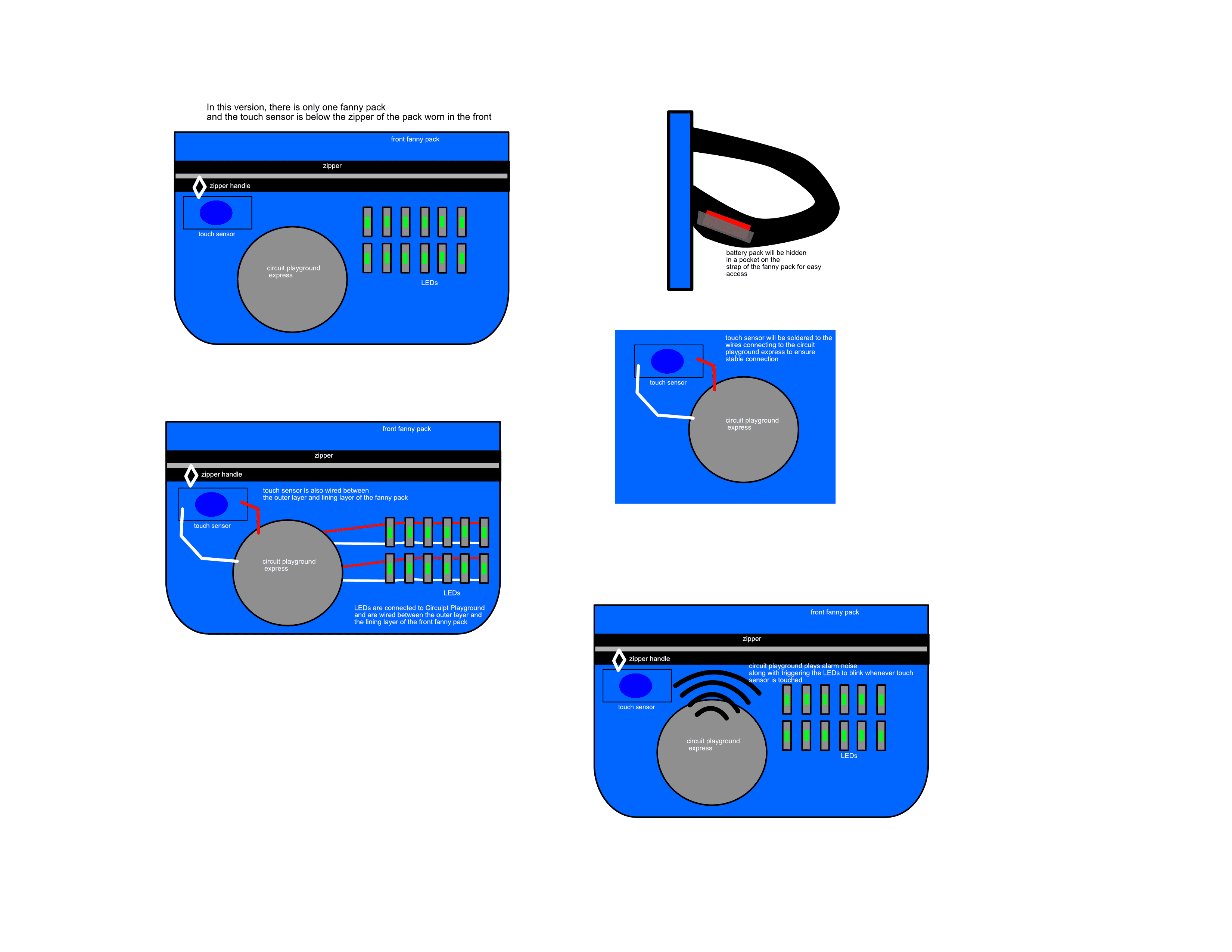
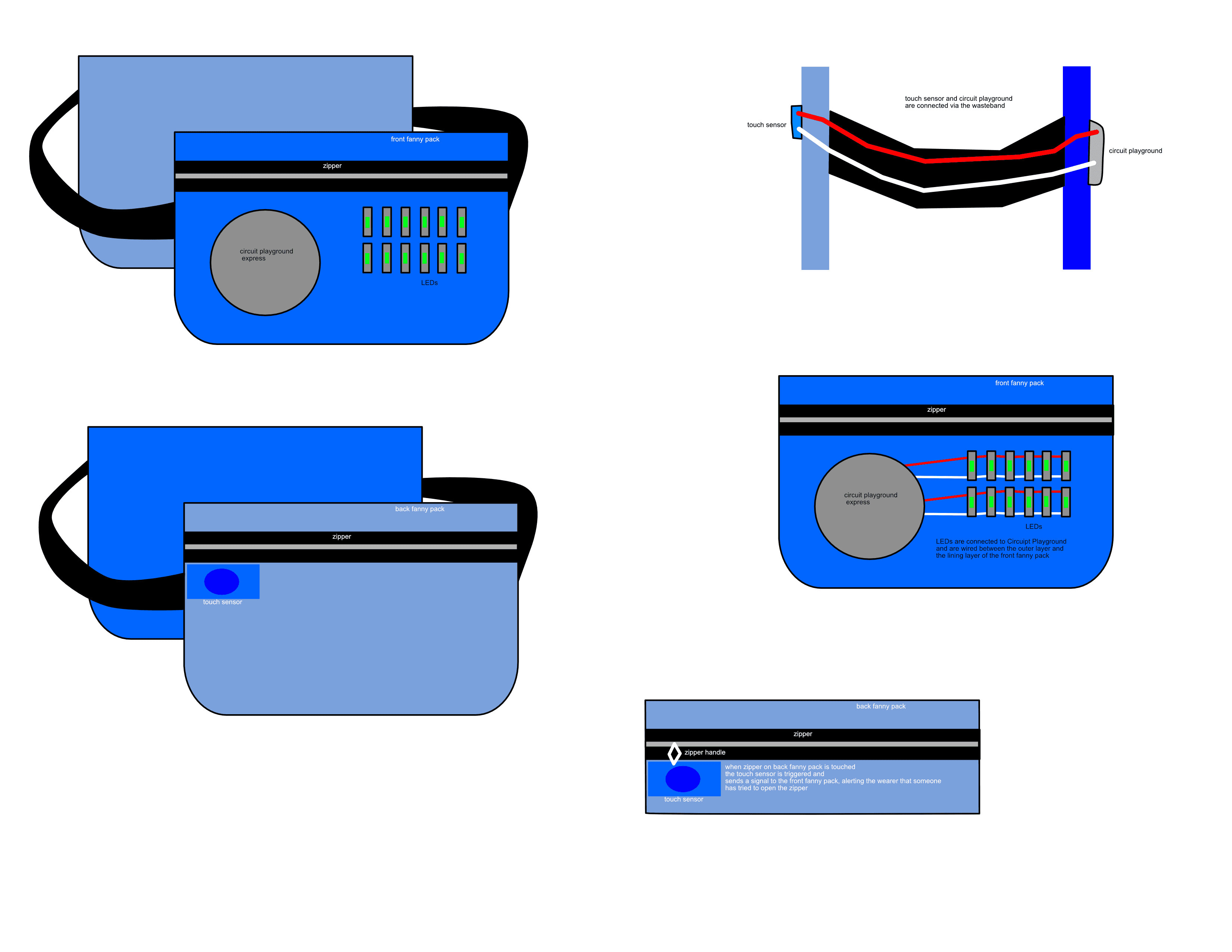
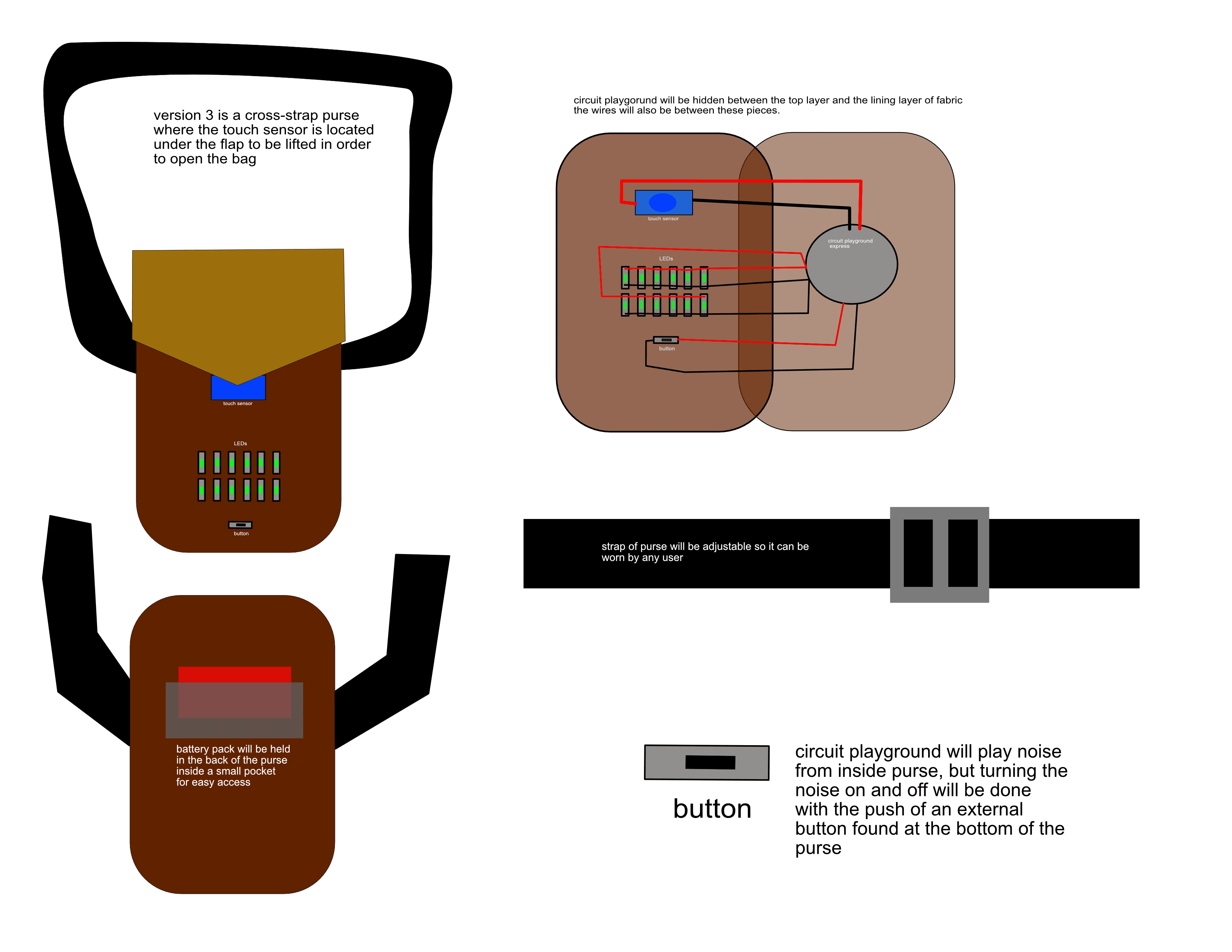
I explored multiple form factors, including fanny packs, small phone-sized bags, and clutch-style designs, considering how each would be worn, accessed, and protected while traveling. In parallel, I ideated on different alert mechanisms and sensor combinations.
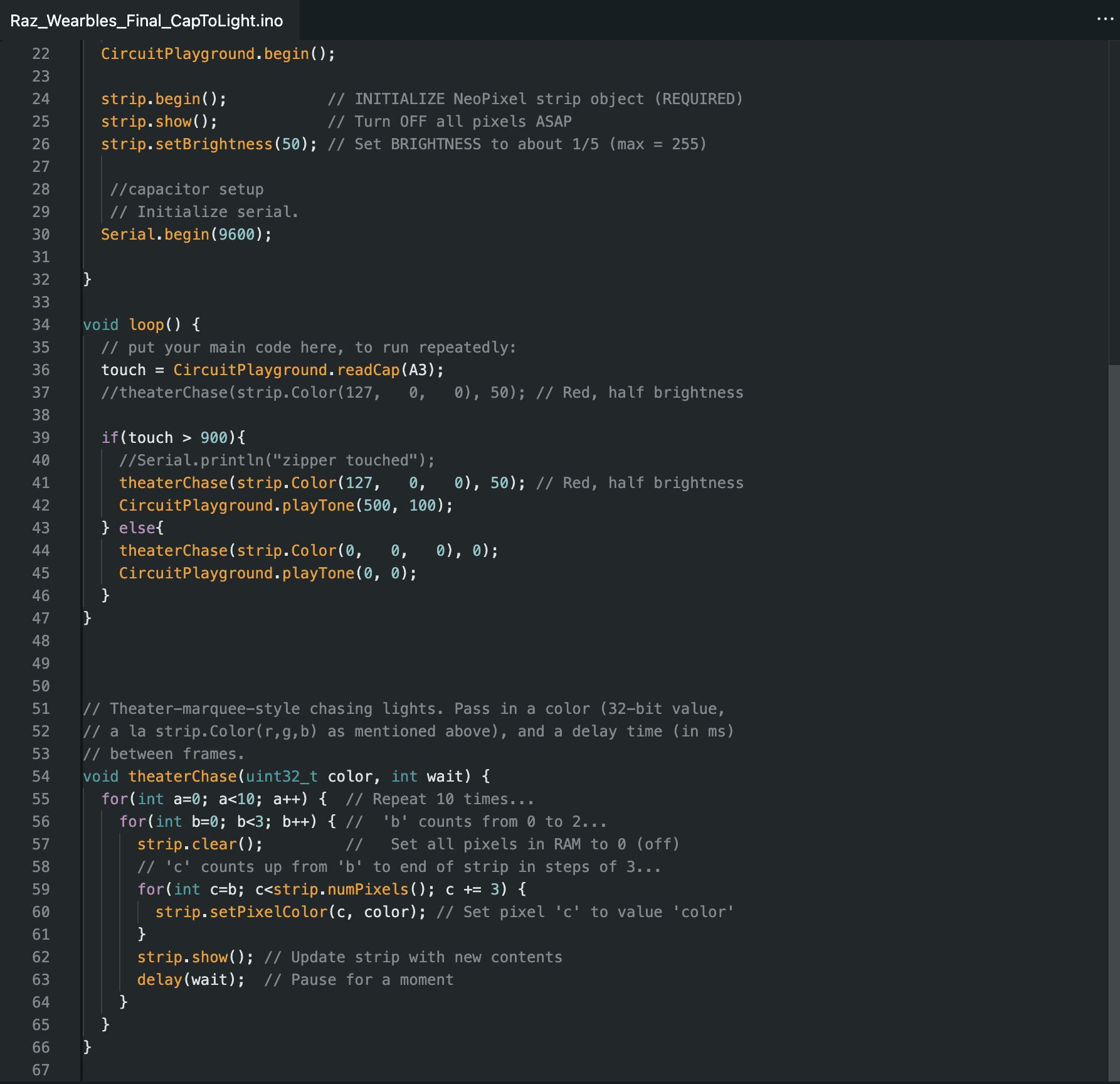
Wanting to deepen my Arduino skills while prioritizing accessibility, I designed the system to use capacitive touch detection on the zipper, paired with both an audible alarm and flashing LED lights. This approach ensured that alerts would be noticeable to users regardless of hearing or vision ability, while also discouraging the person attempting to access the bag.
Iteration
To create a durable and intentional-feeling product, I chose to construct the purse from leather. This decision introduced new challenges—most notably how to make internal lighting visible through an opaque material. I solved this by incorporating mesh panels, allowing light to pass through while maintaining structural integrity.
Working with a limited number of NeoPixel LEDs, I arranged the lights in an octagonal formation inspired by the visual language of a stop sign, reinforcing the idea of interruption and warning. Additional mesh sections were added to make the lighting feel like an integrated design choice rather than a purely functional compromise. I explored adding the word “STOP” into the design but ultimately rejected it, as it felt overly literal and detracted from the sophistication of the object.
Outcome
The final prototype successfully detects unauthorized interaction with the zipper and responds with both sound and light alerts. The project demonstrates an integrated wearable system that balances physical construction, electronic components, and accessibility-driven interaction design.
KEY LEARNINGS
Accessibility benefits everyone: Designing for hearing- and visually-impaired users resulted in a clearer, more robust alert system overall.
Material choices shape interaction: Working with leather, mesh, and metal revealed constraints that directly influenced both form and function.
Physical prototyping exposes real problems: Issues like solder adhesion and zipper mechanics only surfaced through hands-on making, reinforcing the value of early fabrication.
FUTURE ITERATIONS
With more time, I would refine the design into a more travel-appropriate form factor by adding my original back strap that I didn't have time to add in the end, moving away from a clutch-style carry. I would redesign the lighting system to use a single, stronger directional light rather than mesh-diffused LEDs, improving visibility for hearing-impaired users. Finally, I would integrate the lock switch directly into the strap, allowing users to arm and disarm the system without triggering the alarm by opening the bag.